On-Device AI Explained: Why AI Is Moving Onto Your Phone and Laptop
AI used to live in giant data centers. Now it is moving onto your phone and laptop. Here is why on-device AI matters for privacy, speed, and everyday costs.
Advertisement

For years, using AI meant sending your words off to a distant data center and waiting for an answer to come back. That round trip is still how most chatbots work. But a quieter migration has begun: AI features are moving onto the devices themselves — into phones, laptops, and even earbuds — and running without a network connection at all.
The shift is driven by three of the most persuasive arguments in technology: privacy, speed, and cost. Here is what on-device AI is, what makes it possible, and why it is starting to matter to anyone shopping for a phone or laptop.
What Is On-Device AI?
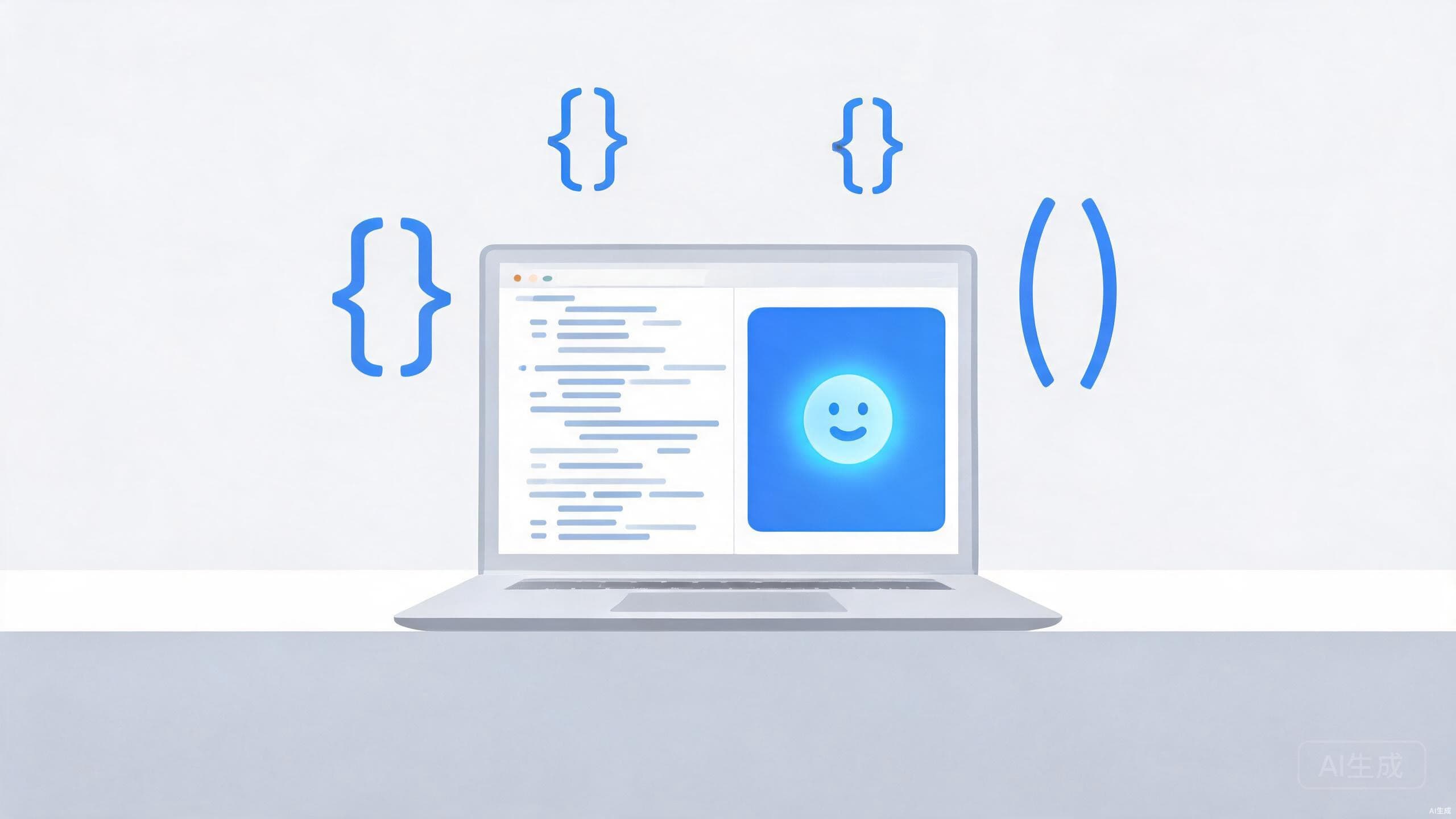
On-device AI, sometimes called edge AI, runs a machine learning model directly on your hardware rather than on a server farm. The model lives in your device's memory, processes your data with your device's own chips, and never needs to leave.
You have probably already used it without knowing. Face unlock on modern phones, wake-word detection that listens for a voice command, photo search that finds "dogs" without anyone labeling a single image, and translation features that work in airplane mode are all on-device AI. The flashier generative features — summarization, smart replies, image editing — are increasingly joining them.
The cloud isn't going away. Frontier models, the giant systems behind advanced chatbots, are simply too large for a phone. What has changed is that capable smaller models now fit on consumer hardware. If you are curious how those models work under the hood, see our explainer on how large language models function — the same principles apply, just compressed.
Why the Shift Away From the Cloud
Privacy
When AI runs locally, your data stays local. A voice assistant that processes recordings on your phone has nothing to upload. A summarizer reading your private messages doesn't ship those messages to a vendor's servers. For sensitive material — health notes, legal documents, personal journals — that architecture difference is the whole ballgame, and it pairs naturally with the habits in our digital privacy guide.
Speed
Cloud AI cannot beat the responsiveness of a computation happening inches from your screen. There is no network round trip, so features like real-time transcription, instant photo cleanup, and next-word prediction feel immediate. A good rule of thumb: when a feature responds the instant you tap, the model behind it is probably local.
Cost
Every query sent to a data center costs its operator real money in compute and bandwidth. Every query run on your phone costs the provider essentially nothing. As AI features become standard across billions of devices, that economics pushes the industry to move whatever it can onto the device — and pass the battery bill along to your hardware instead.
The Hardware Making It Possible
Running a neural network efficiently demands a different kind of chip than spreadsheets and web browsing do. That is why recent phone and laptop processors increasingly include a neural processing unit (NPU) — dedicated circuitry built for the repetitive multiply-and-add math that neural networks run on.
NPUs handle AI workloads far more efficiently than general-purpose processors, which matters because modern devices run small models continuously in the background: listening for wake words, ranking notifications, enhancing your photos as you take them. Chipmakers now advertise NPU performance as a headline specification alongside CPU speed and graphics, much as battery life and camera quality once dominated the spec sheet.
For shoppers, this changes what to look for. If you expect to use AI features over a device's lifespan, memory matters more than it used to — local models are hungry for RAM — and an efficient NPU helps preserve battery life. Our budget laptop review framework walks through weighing specifications like these against real-world needs.
What On-Device AI Can Do Today
Local models excel at focused, repeated tasks:
- Speech recognition and wake-word detection
- On-device transcription and translation
- Photo and video search, enhancement, and editing
- Text prediction, smart replies, and notification summaries
- Health and sensor analysis, such as fitness tracking
Where local models still fall short is open-ended generative work — long-form writing, complex reasoning, deep research across many sources. Those jobs still mostly go to the cloud, or to a hybrid arrangement in which a small on-device model handles simple requests and decides when to escalate the hard ones to a larger server model. Expect that hybrid pattern to become the default in the next few years.
What This Means for You
For most people, the practical effects are subtle but pleasant: features that work without signal, responses that feel instant, and fewer awkward moments when an assistant goes mute because the Wi-Fi dropped. The privacy effect is structural — less of your daily life flows through other people's servers by default.
It also has implications for device longevity. As with any capability shift, software will gradually assume the hardware can handle local AI, and older devices without capable NPUs will feel the squeeze sooner. Nobody needs to rush an upgrade over this today, but it is a factor worth keeping on your radar for any purchase horizon longer than a couple of years.
Conclusion
On-device AI is the industry quietly fixing its own economics and its privacy problem in a single move. By shrinking capable models and building chips purpose-built to run them, device makers are making AI features faster, more private, and available anywhere — no bars of signal required.
The cloud will keep the frontier. But the everyday AI — the transcription, the photo fix, the reply suggestion — is moving home to your hardware, and that trend is only accelerating.